The 12 houses in astrology: what each house rules, with examples
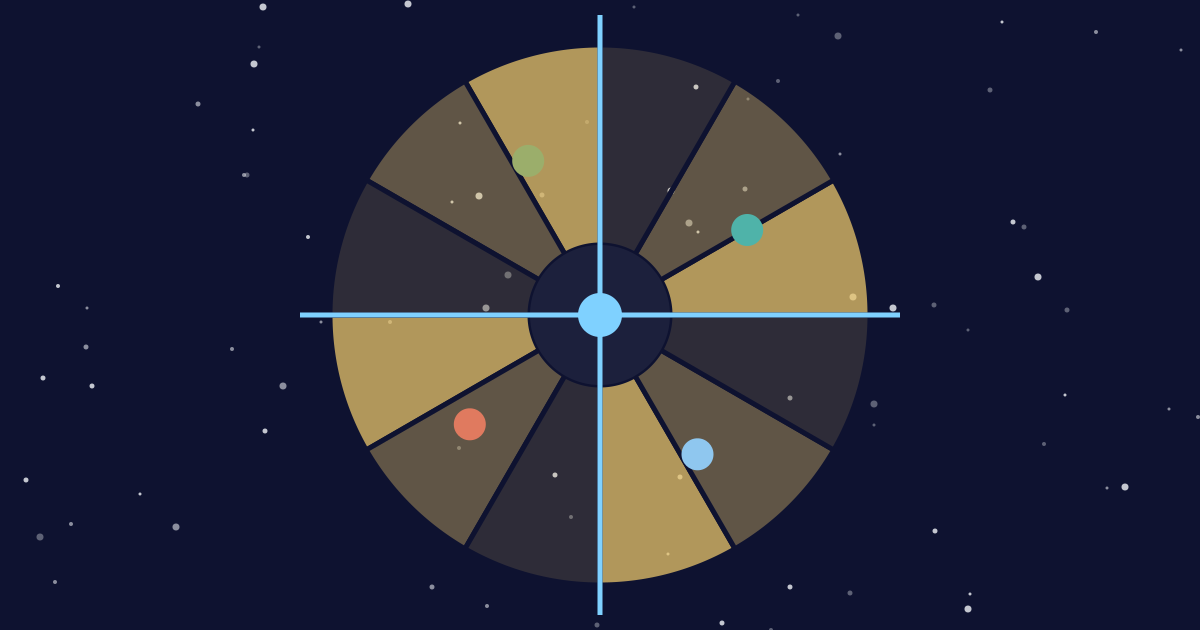
Signs tell you how a planet acts; houses tell you where in life it shows up. Everyone born on the same day has Mars in the same sign, but in one chart it lands in the 10th house of career and in another, born six hours later in the same town, in the 7th house of partners. Houses are the part of the chart that belongs to the hour and the place, which is why they need a good birth time.
What is a house?
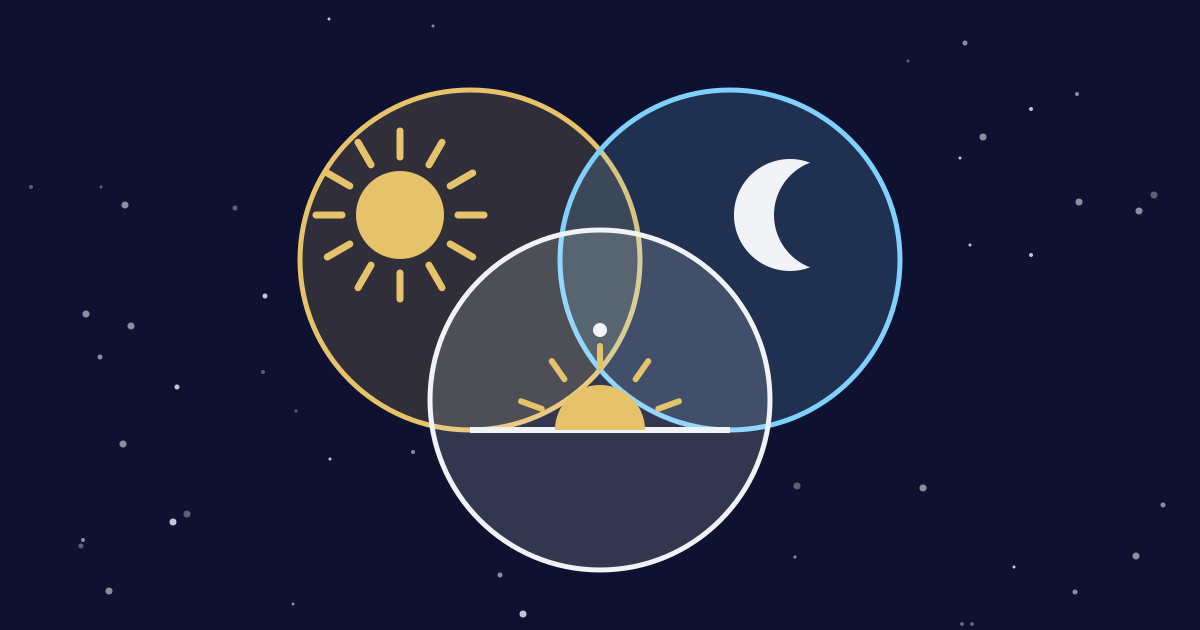
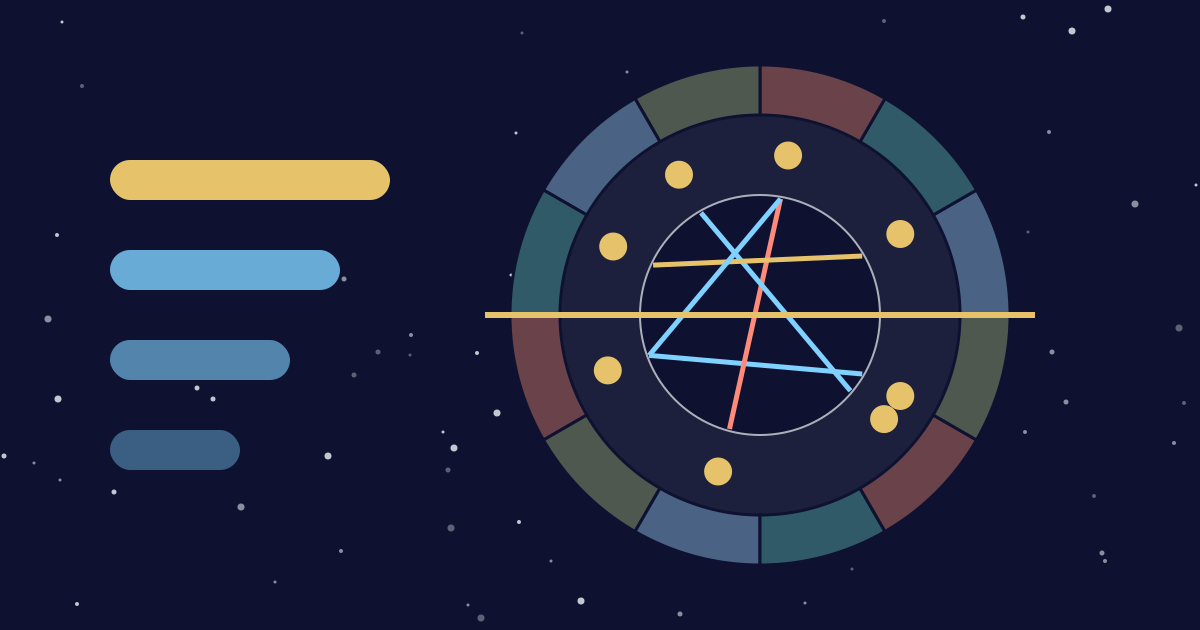
Houses divide the sky as seen from the birthplace. The horizon, from Ascendant to Descendant, separates the sky above from the sky below; the meridian, from MC to IC, separates east from west. The houses are counted counter-clockwise from the Ascendant, so houses 1 to 6 lie below the horizon and 7 to 12 above it.
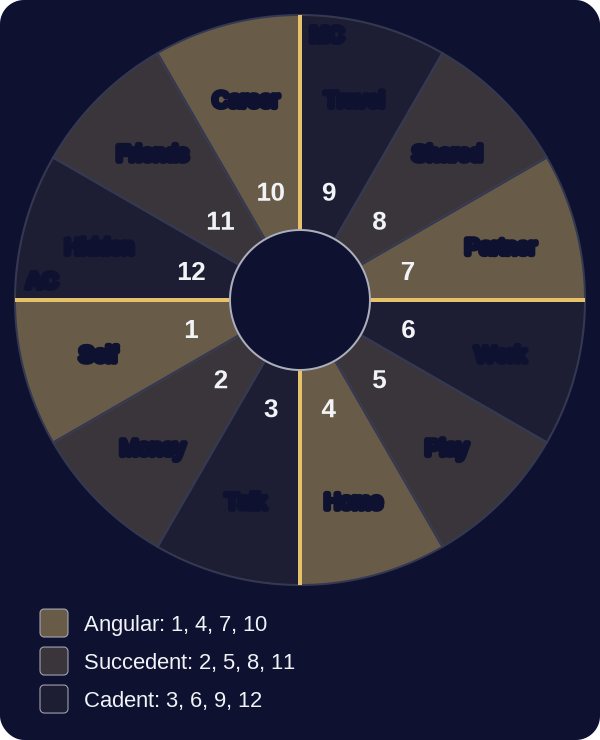
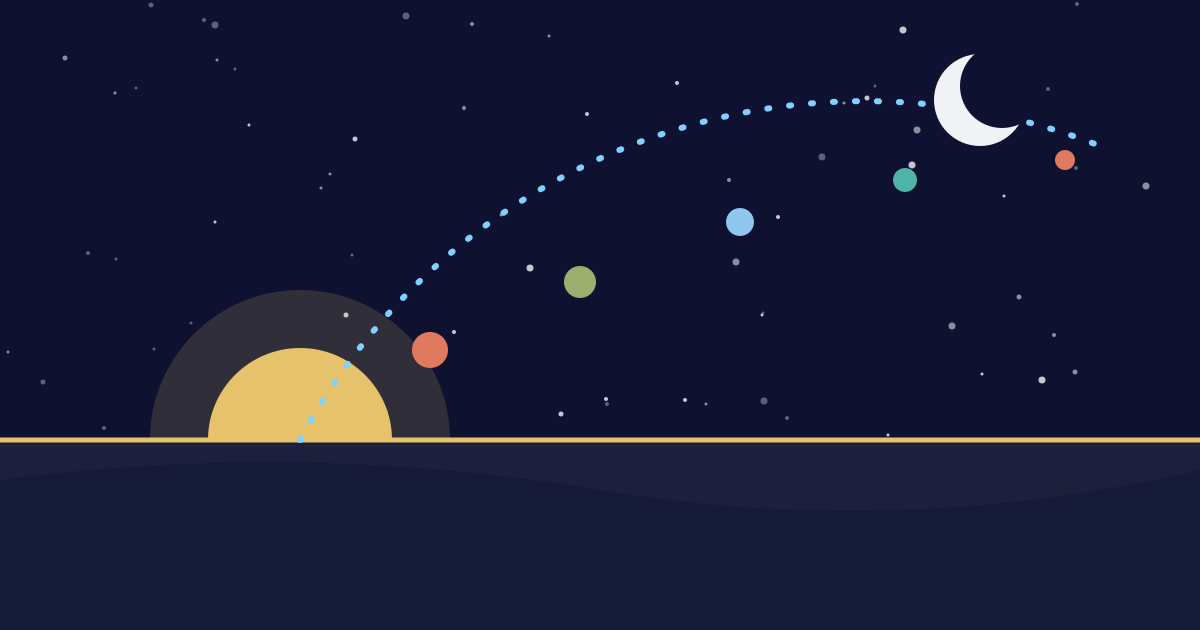
Earth's rotation carries every planet clockwise through the houses once a day. A planet rises at the Ascendant and climbs through the 12th, 11th and 10th; at the MC it passes into the 9th, sets at the Descendant into the 6th, and crosses the IC into the 3rd. That gives you a quick check on any chart: around sunrise the Sun sits near the 12th/1st house line, around local noon near the 10th/9th, around sunset near the 7th/6th, around midnight near the 4th/3rd. Einstein, born before noon, has the Sun in the 10th house; the New York example you can enter in the birth chart calculator, born in the early afternoon, has it in the 9th. If your Sun is nowhere near where the clock says it should be, check the time and the UTC offset first.
The twelve houses at a glance
The Latin names come from a medieval memory verse; the natural sign and ruler come from the modern habit of laying the zodiac over the houses, Aries on the 1st.
| House | Latin name | Main topics | Natural sign · ruler |
|---|---|---|---|
| 1st | Vita (life) | Body, temperament, first impression, how you start things | Aries · Mars |
| 2nd | Lucrum (gain) | Money, possessions, what you value | Taurus · Venus |
| 3rd | Fratres (siblings) | Siblings, neighbours, short trips, everyday talk, early schooling | Gemini · Mercury |
| 4th | Genitor (parent) | Home, family roots, a parent, private life | Cancer · Moon |
| 5th | Nati (children) | Children, pleasure, romance, creative work, play | Leo · Sun |
| 6th | Valetudo (health) | Daily work, routines, health habits, service | Virgo · Mercury |
| 7th | Uxor (spouse) | Partners, marriage, contracts, open rivals | Libra · Venus |
| 8th | Mors (death) | Shared money, debts, inheritance, endings and crises | Scorpio · Mars (Pluto) |
| 9th | Pietas (piety) | Long journeys, higher study, belief, law, publishing | Sagittarius · Jupiter |
| 10th | Regnum (kingdom) | Career, reputation, public role, authority | Capricorn · Saturn |
| 11th | Benefacta (benefits) | Friends, groups, allies, hopes | Aquarius · Saturn (Uranus) |
| 12th | Carcer (prison) | Retreat, hidden matters, institutions, what works behind the scenes | Pisces · Jupiter (Neptune) |
Do not mix the natural sign up with your own chart: your 7th house is the 7th house whatever sign is on its cusp. The natural sign only explains why Libra keywords and 7th-house keywords sound alike.
Angular, succedent and cadent houses
The houses fall into three groups of four, and I weigh a planet by its group before I read its topic:
- Angular (1, 4, 7, 10) begin at the four angles. Planets here are strong and visible; they act in the world.
- Succedent (2, 5, 8, 11) follow the angles. Tradition links them to resources and to what the angular houses start and then keep.
- Cadent (3, 6, 9, 12) "fall away" from the angles. They are the houses of learning, adjusting and background work, quieter but not weak.
Hellenistic astrologers also gave each traditional planet a house where it "rejoices": Mercury the 1st, the Moon the 3rd, Venus the 5th, Mars the 6th, the Sun the 9th, Jupiter the 11th and Saturn the 12th. It is worth knowing because it explains why a Sun in the 9th, cadent as it is, was never read as a weak Sun.
Reading a planet in a house: examples
My working formula is simple: the planet is what, the sign is how, the house is where. Then I add the ruler of the house's sign.
Einstein's 10th house holds the Sun, Mercury, Venus and Saturn. In traditional terms identity, thinking, values and discipline all point at the public role. His Moon in Sagittarius in the 6th makes daily work the place where he feels at home; Mars in Capricorn in the 7th puts drive into partners and rivals, people met one to one.
The New York example chart reads differently: Sun and Jupiter in Cancer in the 9th (study, travel, belief), Moon in Aries and Mars at 2° Taurus, both in the 6th (a restless working routine), Pluto in Scorpio in the 1st, 8° from the Ascendant. Same method, different emphasis.
What does an empty house mean?
Nothing alarming. Ten planets in twelve houses always leave at least two empty, usually four to six. An empty house is not an empty part of life; you read it through the sign on its cusp and that sign's ruler. Einstein's 2nd house, money, has no planet. Its cusp is 28°37' Cancer, ruled by the Moon, which sits in the 6th: in tradition, income comes through daily work.
Quadrant systems such as Placidus also make houses of very different sizes, and a sign can sit entirely inside one house without touching a cusp. That is an intercepted sign. Einstein has two: Scorpio inside the 5th and Taurus inside the 11th, where his Neptune and Pluto stand. Some astrologers read intercepted signs as themes that take longer to express; I note them and move on unless they hold planets.
Why do my houses change between systems?
Because the systems divide the same sky differently, and a planet near a cusp can fall on either side. Einstein's Sun is in the 10th house in Placidus and the 9th in Whole Sign; Mercury, Venus and Saturn stay in the 10th in both. Signs and degrees never change. When a planet sits within a few degrees of a cusp, many astrologers read it with the next house as well. The main page explains how Placidus, Whole Sign, Equal and Porphyry are built and which one to start with.
For the order in which to put all this together, see how to read your birth chart step by step; for why the houses depend so much on the clock, see the rising sign and birth time guide.
Frequently asked
Which house is the most important in a birth chart?
No single house is, but the angular houses, the 1st, 4th, 7th and 10th, carry the most weight in tradition. Planets in them are the most visible in a person's life.
What does an empty house mean in astrology?
Only that no planet stood there at your birth. Every chart has several empty houses; read them through the sign on the cusp and where that sign's ruling planet sits.
Why did my planet change house when I switched house systems?
House systems draw the cusps differently, so a planet near a cusp can land on either side of it. Its sign and degree stay the same; only the house number changes.
What is an intercepted sign?
A sign that lies wholly inside one house and touches no cusp, which happens in quadrant systems such as Placidus. The opposite sign is always intercepted too, in the opposite house.